Texas is known for many things: Friendly people, cowboys, and…sinkholes? That’s right – Texas is one of the states with the most sinkholes. And with all that unruly soil, it can be challenging to create a stable base for your home or business. But don’t worry! Prime Asphalt got a few solutions to help you out. So please read on and learn more about creating a safe and stable foundation in Texas!
1. What are sinkholes, and why are they a problem in Texas?
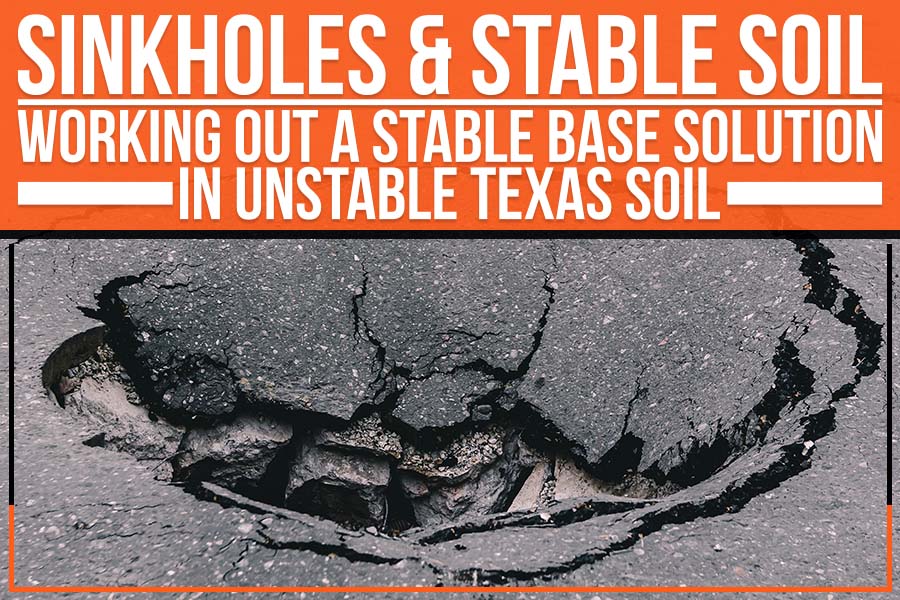
Sinkholes are hole-like depressions that form when the ground collapses due to a void beneath the surface. Much of Texas sits on limestone, a sedimentary rock easily eroded by acidic water. (Around Waco and DFW, the bigger day-to-day problem is usually Blackland clay that shrinks and swells, not sinkholes.)
The water percolates through the ground and dissolves the limestone when it rains. This process creates voids and caverns underground, and when these caverns become too large, the ground above them collapses, forming a sinkhole.
2. How can you tell if your soil is stable enough to support a home or building foundation?
The best way to examine if your soil is stable enough to support a home or building foundation is to have a professional engineer or geologist perform a stability assessment. This assessment will evaluate the soil composition, the water drainage, and the potential for sinkholes or other foundation problems.
3. What solutions are available to homeowners and builders who need a stable foundation in Texas?
Possible remedies to resolve sinkholes in Texas are:
- Use fill dirt or concrete to stabilize the area around the sinkhole.
- Install a drainage system to remove excess water from the site and reduce the risk of sinkholes forming.
- Inject grout into the ground to fill voids and stabilize the soil.
4. Which solution is the best for your specific needs – stabilization grouting, piles, or deep foundations?
The answer to this question depends on the specific situation.
If the sinkhole is small and has not caused any damage to the structure, then filling it with dirt or concrete may be the best solution.
If the sinkhole is large or already damaged to the foundation, then stabilization grouting, piles, or deep foundations may be necessary.
5. Is there anything you can do to prevent sinkholes from forming in the first place?
When it comes to avoiding sinkholes, prevention can be your best option. Here are some tips:
- Avoid building on or near areas that are prone to sinkholes.
- Ensure that your property has proper drainage to avoid pooled water around the foundation.
- Have your property inspected by a qualified engineer if you suspect that there may be a problem with sinkholes.
6. Where to find trusted professionals in Waco, TX?
A possible remedy for avoiding sinkholes in Texas can begin with hiring professionals with decades of experience. We at Prime Asphalt, serving Waco, TX, have been providing our clients concrete pavement services since 2007, backed by more than 50 years of family experience in the paving business. We offer our customers the best value for their money. Build your foundations stronger with us. Request an estimate or contact us today!
In Central Texas, clay is usually the bigger problem
True sinkholes happen in parts of Texas with limestone underground. But for driveways, lots and roads around Waco, Temple and south Dallas–Fort Worth, the more common problem is the Blackland Prairie clay. These dark clay soils shrink and crack in drought, then swell after heavy rain. That movement pushes and pulls on anything built on top.
Out west, the ground is different again. Around Big Spring and Midland, many properties sit on caliche, a hard, chalky layer that can make a good base when it is compacted properly, though quality varies from site to site.
On pavement, clay movement usually shows up as:
- Long cracks running along the edges of a driveway or road
- Dips and humps that appear after a wet spring or a dry summer
- Edges that break off where water sits beside the pavement
How a stable base gets built
Whether it’s a driveway, a lot or a ranch road, pavement on unstable soil holds up best when the work starts below the surface:
- Strip the organic topsoil so the base sits on firm ground.
- Grade for drainage so water runs off and away instead of soaking into the clay under the pavement.
- Build a compacted crushed-stone base thick enough for the traffic it will carry.
- Stabilize the soil when needed. On very active clay, engineers sometimes call for treating the subgrade, often with lime.
- Support the edges and keep ditches and culverts open so water doesn’t sit beside the pavement.
We do this kind of groundwork on asphalt paving, farm and ranch roads and subdivision streets.
Related: Repair, Resurface or Replace? How to Decide What Your Asphalt Needs
Frequently asked questions
Is the dip in my driveway a sinkhole?
Rarely. Most dips come from base settlement, a washout or a leaking pipe underneath. If you see a sudden, deep hole, or cracks in your home’s foundation, call a geotechnical or structural engineer first.
Who should I call about my home’s foundation?
A foundation specialist or structural engineer. We handle paved surfaces, not building foundations.
Can tar and chip work on clay soil?
Yes, on a proper base. Tar and chip is flexible and easy to renew, which makes it a practical choice for long drives on shifting ground.
Can a failing base be fixed without starting over?
Small soft spots can be cut out and rebuilt with an asphalt repair. If the base has failed across the whole surface, full reconstruction is usually the only lasting fix.
Why does my driveway crack more in drought years?
Clay loses moisture and shrinks, especially along edges and near trees, which pulls the pavement apart. Sealing those cracks keeps rain from soaking in and making it worse.
Get a free estimate. If your pavement is shifting or cracking, contact us for a free estimate and we’ll look at what’s happening underneath.