
Crack sealing stops small cracks becoming potholes
Water that gets into cracks softens the base underneath and turns a crack into a pothole. We clean and seal cracks in driveways, parking lots and roads before that happens.
Serving Waco, Central Texas, DFW and West Texas
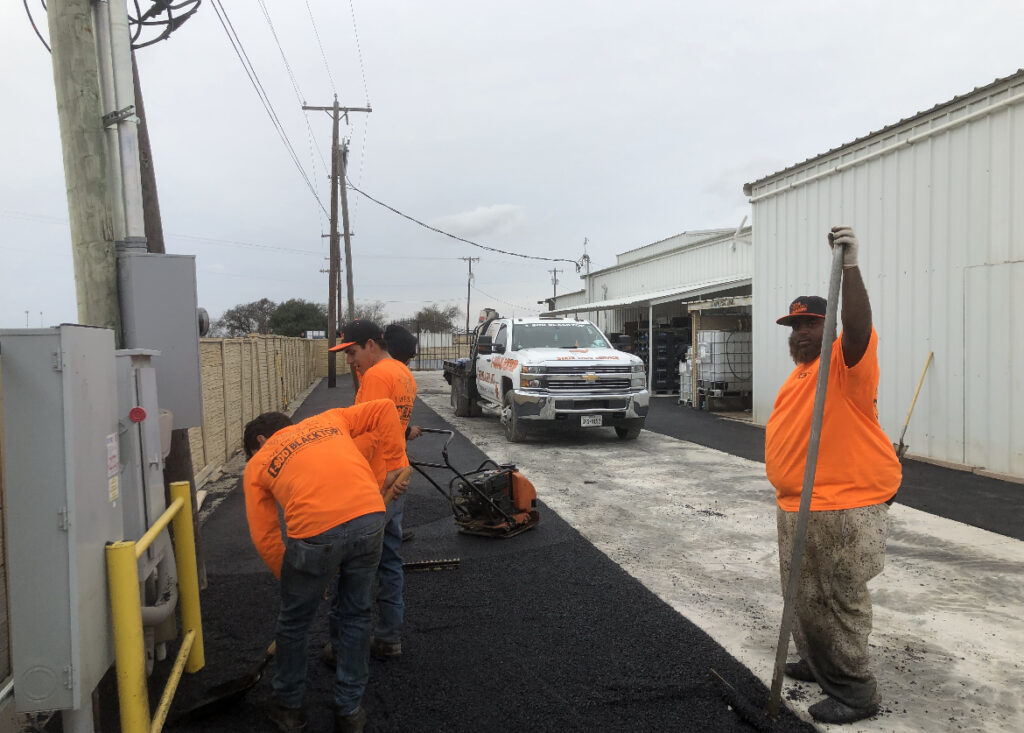
How we do it
We clean each crack with air, then fill it with hot rubberized crack sealant that bonds to the edges and flexes as the pavement heats and cools.
Crack sealing is the cheapest repair there is, and doing it every year or two keeps much bigger repair bills away.
Why small cracks matter
A crack lets water reach the base. In Central Texas clay, that water makes the ground swell, then shrink as it dries, and the crack widens a little more each cycle. Left alone, a single crack becomes a web of cracks and then a pothole. Sealing it early costs a small fraction of the patch or overlay it prevents.
What we seal, and what we do not
- Good candidates: single lines along joints and edges, transverse cracks across a lot or road, and cracks that open and close with the seasons.
- Not a sealing job: alligator cracking (a web of connected cracks), sunken areas and crumbling pavement. Those mean the base is failing, and we will recommend a patch instead.
How often
Most driveways, lots and private roads need some crack sealing every one to three years as new cracks appear. Pairing it with a sealcoat every two to three years is the most cost-effective way to keep asphalt going for 15 to 20 years or more.
More in repair, resurface or replace and private road maintenance.
Our process
What to expect
1. Clean
Cracks blown out so the sealant bonds.
2. Fill
Hot rubberized sealant poured in.
3. Finish
Sealant leveled with the surface.
4. Protect
Optional sealcoat over the whole surface.
A good fit for
- New cracks in driveways and lots
- Asphalt before sealcoating
- Roads after winter
- Parking lots ahead of restriping
Where we work
We serve Waco and Central Texas from our Waco office, and the Permian Basin from our Big Spring office.
Also: 1-800-BLACKTOP
FAQ
Crack Sealing questions
When should cracks be sealed?
As soon as they appear, ideally in mild weather. Small cracks are cheap to fix; potholes are not.
Will the cracks come back?
Pavement keeps moving, so new cracks form over time. Annual or every-other-year sealing keeps up with them.
Is crack sealing the same as crack filling?
They are close. We use hot rubberized sealant that flexes, which outlasts cheaper fillers.
Can every crack be sealed?
No. Single cracks and joint cracks seal well. Alligator cracking, sunken spots and crumbling areas point to a failing base and need a patch instead.
How soon can I drive over sealed cracks?
Hot-applied sealant firms up quickly, and most driveways and lots can take traffic again within about an hour.
Related services
You might also need
Sealcoating
Protect asphalt from sun, water and oil, and bring back that deep black finish.
Asphalt Repair & Patching
Potholes, broken edges and failed patches fixed before they spread.
Parking Lot Repair & Maintenance
Patching, crack sealing, sealcoating and restriping to keep your lot safe and sharp.
Free estimates
Get a free crack sealing estimate
Tell us about the job. We reply within one business day, usually the same day.
- Free, no-pressure estimates
- Residential, commercial and ranch jobs
- Family owned and operated since 2007
Also: 1-800-BLACKTOP